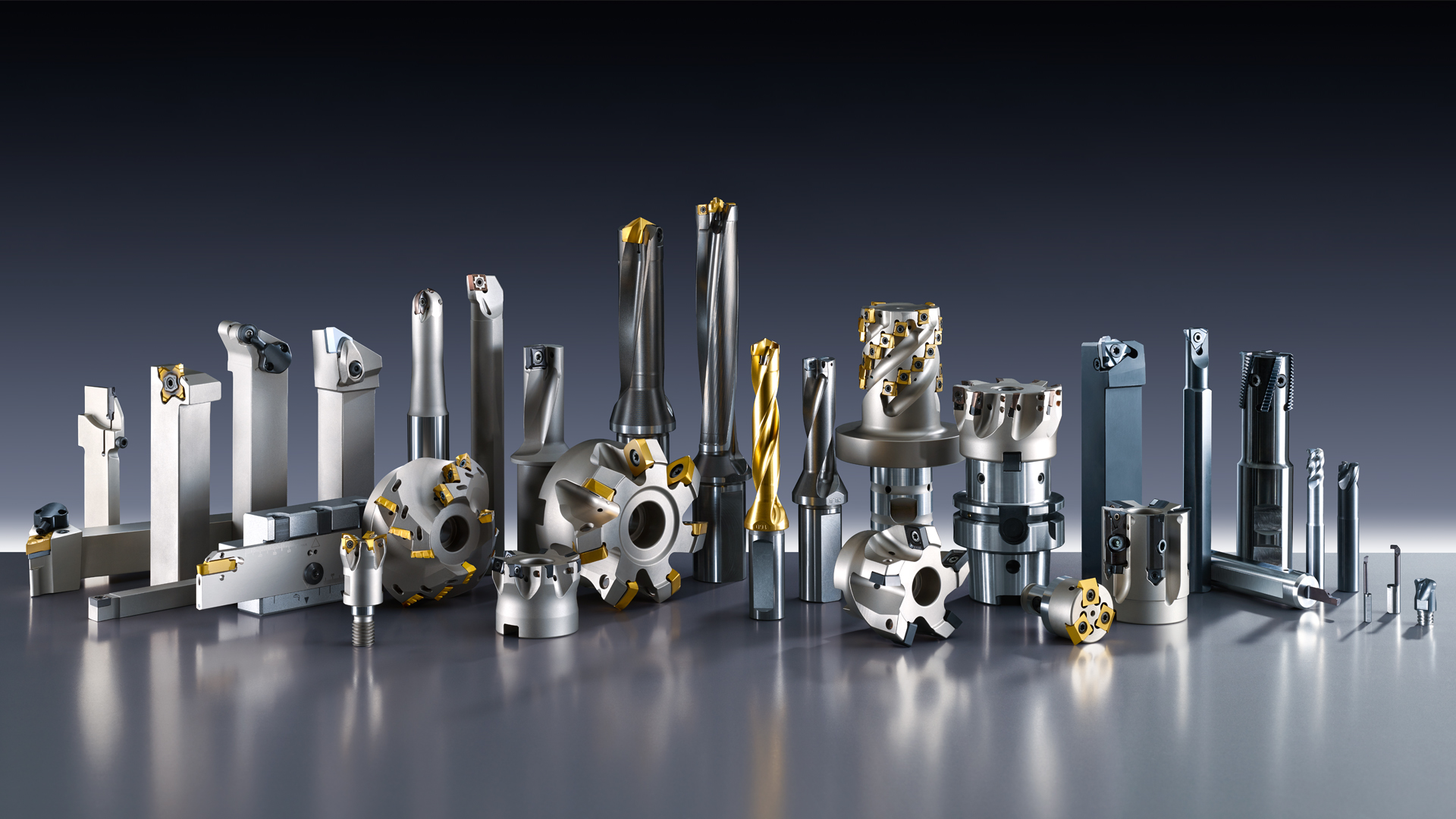
From job shops to high-volume production lines, the right cutting tool is the difference between smooth chips and scrapped parts. “Cutting tool” covers a wide family of instruments that remove material by shearing, abrasion, heat, or a combination of all three. This guide organizes the landscape—by cutting action, common tool forms, materials/coatings, and key selection factors—so you can choose confidently for metals, plastics, and composites.
There are several types of cutting tool used in machining, each designed for specific materials and operations. Common examples include single-point cutting tools for turning and shaping, multi-point tools like drills and milling cutters, and abrasive tools such as grinding wheels, all ensuring precise, efficient material removal in manufacturing.
1) By Cutting Action
Single-point tools
- One main cutting edge.
- Used for turning, facing, grooving, and parting on lathes.
- Examples: lathe inserts, form tools, boring bars.
Multi-point tools
- Multiple edges engage per revolution/reciprocation.
- Higher material removal rates, better heat distribution.
- Examples: end mills, face mills, drills, reamers, taps, broaches, saw blades.
Abrasive tools
- Countless hard grains act as micro-cutters.
- Ideal for hardened steels, fine finishes, and tight tolerances.
- Examples: grinding wheels, honing stones, superabrasive (CBN/diamond) wheels.
Non-traditional “tools”
- Remove material by heat, erosion, or pressure rather than shear.
- Examples: EDM wire/sinker (electrical erosion), laser cutting, waterjet, plasma.
- Great for hard materials, intricate profiles, or minimal mechanical stresses.
2) Common Tool Types by Operation
Turning tools (lathes)
- External turning inserts: Rough/finish styles with chipbreakers.
- Grooving/parting tools: Narrow blades or inserts for cutoff and O-ring grooves.
- Threading tools: Single-point inserts for metric/UN/ACME forms.
- Boring bars: Internal diameter finishing; anti-vibration (damped) bars for deep bores.
Milling cutters
- End mills: 2–6 flutes; square, corner-radius, or ball-nose for 3D surfaces.
- Face mills/shell mills: Indexable inserts for planar surfacing.
- Slot/Keyseat cutters: T-slot, Woodruff, and slitting saws for narrow features.
- High-feed & trochoidal cutters: Specialized geometries for high-speed, low-DOC strategies.
Hole-making tools
- Twist drills: Jobber, stub, parabolic flutes for deeper chip evacuation.
- Indexable drills: Replaceable inserts; high penetration rates.
- Reamers: Final sizing and surface finish control (typically +0/–0.005 mm).
- Countersinks/counterbores: Chamfers and flat-bottom seat preparation.
Thread creation
- Taps: Spiral point (through holes), spiral flute (blind holes), forming taps (no chip).
- Thread mills: Helical interpolation with one tool for multiple pitches/sizes; safer in hard materials.
Broaches
- Pull or push tools with progressively larger teeth; extremely accurate for keyways, splines, hex/DF profiles at high repeatability.
Sawing and cutoff
- Bandsaw blades: Bi-metal for general use; carbide-tipped for tough alloys.
- Circular saws/slitting saws: Thin kerf, precise slots and cutoffs.
Abrasive finishing
- Grinding wheels: AlOx, SiC, CBN, or diamond for OD/ID/surface grinding.
- Honing/lapping: Ultra-fine geometry and finish (µm-level flatness/roundness).
3) Tool Materials and Where They Shine
High-speed steel (HSS)
- Tough, inexpensive, easily re-sharpened.
- Good for general machining, interrupted cuts, and low-to-medium speeds.
- Variants: M2, M42 (cobalt-enhanced for hot hardness).
Carbide (tungsten carbide)
- Excellent wear resistance and hot hardness; backbone of modern machining.
- Ideal for steels, stainless, cast iron, and nonferrous at high speeds.
- Supplied as solid tools or indexable inserts (P/M/K/N/S/H ISO grades).
Cermet
- Ceramic–metal composites; superb wear and finish on steels and cast iron.
- Best for finishing at stable conditions; less tolerant of interruptions.
Ceramic
- Alumina/SiAlON for superalloys and cast iron at very high surface speeds.
- Prefers continuous cuts and rigid setups; brittle compared with carbide.
CBN (cubic boron nitride)
- Second only to diamond in hardness; excels on hardened steels (≥HRC 55).
- Finishing of heat-treated components with mirror-like finishes.
PCD (polycrystalline diamond)
- Unmatched wear life on aluminum, copper, brass, graphite, and composites.
- Avoid ferrous metals at high temps (diamond reacts with iron).
4) Coatings and Edge Prep
PVD/CVD coatings enhance wear, reduce friction, and manage heat:
- TiN/TiCN: General wear resistance and lubricity.
- AlTiN/TiAlN: High-temperature oxidation resistance for dry/HS machining.
- DLC: Ultra-low friction for aluminum and plastics; minimizes built-up edge.
- Nano-layered/gradient coatings: Combine toughness and hot hardness.
Edge preparation—hone, chamfer, or radius—balances sharpness (for soft, gummy materials) and strength (for hard or abrasive materials). Chipbreaker geometries control chip curl and evacuation, critical in deep pockets and small bores.
5) Selecting the Right Tool: Practical Factors
- Workpiece material & condition
- Aluminum: Sharp geometry, polished flutes, DLC or uncoated carbide; high RPM, generous chipload.
- Stainless: Positive rake, robust edge, AlTiN/TiAlN; maintain coolant to fight work hardening.
- Hardened steel: CBN or coated micro-grain carbide at light DOC and stable engagement.
- Composites: PCD or diamond-coated, compression-style cutters to prevent delamination.
- Machine capability & rigidity
- High-speed spindles favor small-diameter carbide; lower-power machines may need fewer flutes and sharper edges to keep chipload up without stalling.
- Use shorter stick-out, stiffer holders (hydraulic, shrink-fit) to curb chatter.
- Operation goals
- Roughing: Strong edges, chip-thickening strategies (high-feed milling).
- Finishing: More flutes, stable cutting, minimal runout (≤5 µm on end mills).
- Tolerances & finish: Reamers, hone/grind for tight holes and low Ra.
- Coolant & chip control
- Through-tool coolant for deep holes, stainless, and superalloys.
- Air blast or MQL for aluminum to avoid thermal shock and swelling.
- Reliable chip evacuation prevents recutting and edge chipping.
- Economics
- Indexable cutters reduce cost per edge in large diameters.
- Solid carbide shines in small diameters and tight features.
- Consider regrind programs for end mills to reduce lifetime cost.
6) Quick Picks for Common Tasks
- Steel roughing: 5-flute AlTiN end mill with variable pitch; high-feed indexable for large faces.
- Aluminum contouring: 3-flute, high-helix polished carbide or DLC; use flood or mist.
- Hardened die work: CBN inserts for finishing; ball-nose micro-grain carbide for 3D surfaces.
- Thin-wall finishing: Sharp, positive-rake tools; climb milling; light radial engagement.
- Precision holes: Parabolic drills + reamer; thread mill instead of tap in hard materials.
Takeaway
There is no single “best” cutting tool—only the best match for your material, machine, and objective. Classify the operation (turn, mill, drill, finish), choose a tool form that controls chips, select a substrate/coating that survives the heat and abrasion you’ll generate, and set conditions your machine can hold rigidly. Do that, and you’ll turn chips into tolerances—efficiently, repeatably, and profitably.